
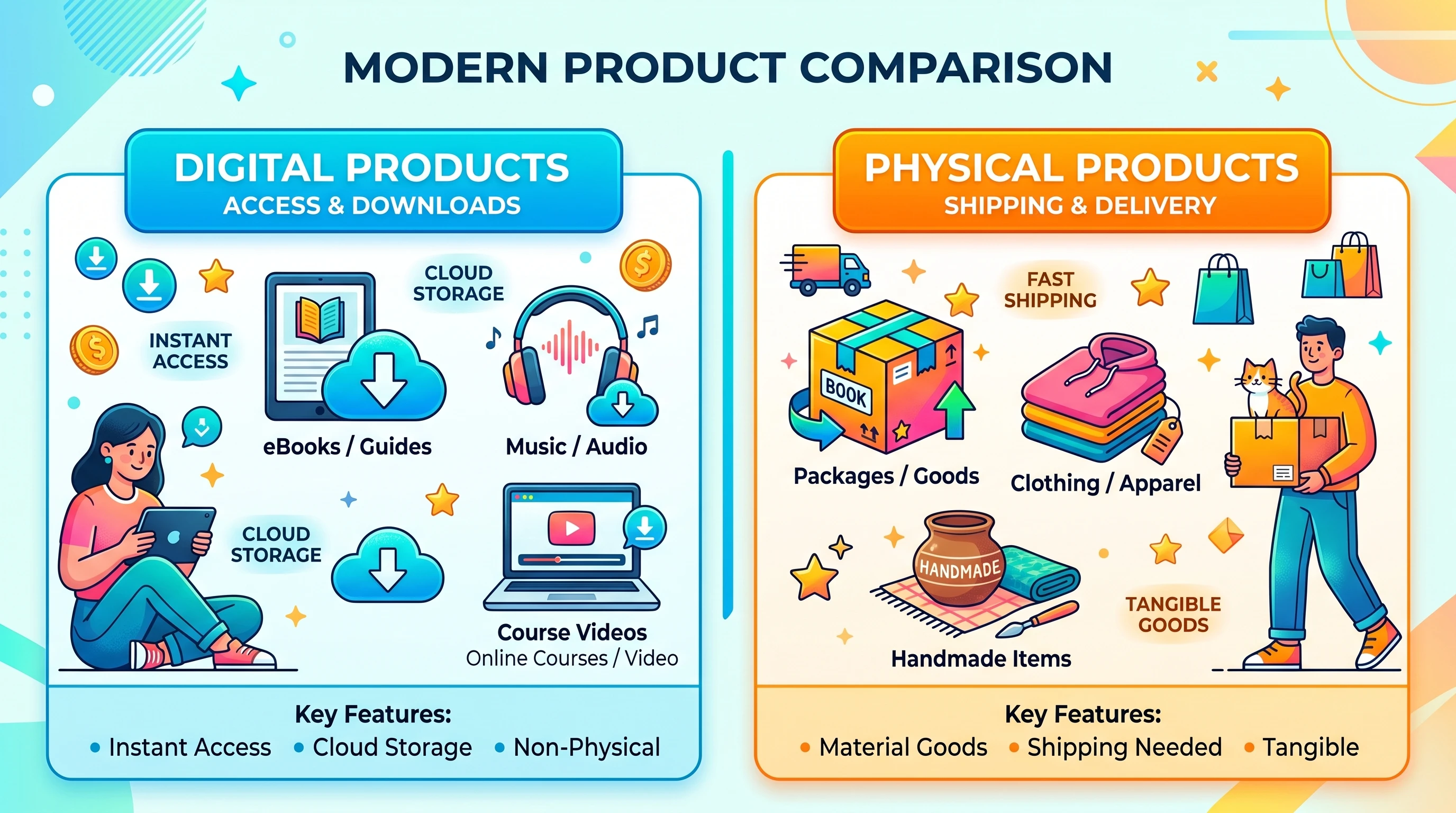
If you’re thinking about starting an online business, the question of whether to sell digital or physical products comes up pretty fast. Both options offer some big opportunities and come with unique challenges. I’ve run both types of businesses myself, so I know first-hand that there’s no single answer that fits everyone. Your choice depends on your skills, resources, and what you enjoy most.
I’ll break down how digital and physical product sales work, give you the practical pros and cons, take a look at how online selling has changed over the years, and share my top tips on where and how to get started. If you’ve been curious about this, time to roll and get into your options.
Understanding Digital vs. Physical Products
What Counts as a Digital Product?
Digital products are anything you can deliver online without shipping a physical object. Think ebooks, software, courses, music files, stock photos, and printables. As a seller, you’re offering something people can download or access, rather than waiting for a package to show up at their door. The beauty here is you can reach a global audience instantly and keep your overhead much lower than traditional retail.
What’s Involved in Selling Physical Products?
Physical products are things you can hold in your hand, like clothes, gadgets, books, home decor, or handmade art. Selling these online means you’ll be handling packaging, shipping, and probably returns. There’s more logistics, but there’s also something satisfying about sending real products to real people. You get the pleasure of seeing your creations in the hands of satisfied customers and you might even spot your product out “in the wild.”
Pros and Cons of Selling Digital Products
Pros:
- No inventory to manage or warehouses to rent
- Zero shipping costs; just upload and deliver instantly
- Super scalable: sell to 10 or 10,000 people with hardly any extra work
- Automated delivery lets you earn money around the clock
- Great profit margins since there’s usually one-time creation and unlimited sales
- Updates to your product are quick and simple, giving your customers more value over time
Cons:
- Lots of competition, since so many people do this
- Easy for people to copy or pirate your product
- Hard to stand out unless you offer real value or strong branding
- Depending on what you sell, refunds and customer support can add up
- Marketing takes ongoing work to keep sales coming in
- Your product feels less “real” to some shoppers, making conversions a bit harder for certain audiences
Pros and Cons of Selling Physical Products
Pros:
- Endless range of what you can sell; almost everything fits somewhere online
- People love getting something tangible, especially with gifting and collectibles
- Potential to build a recognizable brand with repeat buyers
- Less risk of piracy (no one’s going to make knockoff soap from your download!)
- Selling physical products can let you step up the experience with personalized packaging and thank-you notes
Cons:
- Upfront investment; inventory, shipping supplies, maybe storage
- Shipping can be a headache with lost packages, costs, and delays
- Returns and exchanges take up time and can eat into profits
- Scalability is trickier; you may need to hire help as you grow
- Margins can be pretty tight once you factor in costs
- Customer expectations for fast shipping and easy returns have never been higher, which adds pressure to small sellers
How Online Selling Has Changed Since 2000
Online business has changed massively over the last twenty years. Back in 2000, selling online meant setting up your own website (often from scratch), figuring out credit card payments, and hoping your customers felt safe enough to buy. E-commerce giants like Amazon and eBay were starting to gain ground. Personal online stores, though, were clunky and expensive to build. Digital goods then were mostly software or music—the Kindle hadn’t even launched yet. Physical product sellers often depended on eBay auctions or simple shopping carts. Shipping was slow, and customer trust was lower because nobody knew your store name yet.
Now, selling both digital and physical goods is super streamlined. Platforms can handle payments, delivery, and even marketing. Digital products have exploded, thanks to services like Teachable and Gumroad. Print on demand has made it much easier for physical sellers to skip inventory costs while shipping worldwide. Social media, influencer marketing, and SEO have opened up new ways to reach customers fast. Automated systems for fulfillment, email marketing, and payment processing mean you can run a sizable business from your laptop.
Where Are Things Headed?
Both types of products are growing, but in different ways. Digital goods keep expanding with the creator economy, like courses, digital planners, virtual backgrounds, and AI-generated files. Automation and memberships make it easier to earn repeat revenue, letting even small creators build a loyal customer base. On the other hand, physical products are still strong, especially with niche handmade items, subscription boxes, and branded merch. Sustainable and ethical shopping trends are influencing what sells well. Tools like Shopify and Etsy are making it much simpler to open a store on your own terms.
Best Platforms for Selling Digital Products
- Gumroad: Super userfriendly for creators, allows selling courses, downloads, memberships, and more with minimal setup. Payouts are reliable, and integration is simple. Gumroad
- Shopify: Not just for physical goods. Shopify apps like Digital Downloads let you sell files from your own branded store. Shopify
- Teachable/Thinkific: Built for online courses. If you want to teach, these platforms let you upload videos, quizzes, and more with automated delivery. Teachable and Thinkific
- Etsy: A great option for digital downloads like printables, planners, SVG files, and more. Big built-in audience, but you’re sharing the spotlight with lots of others. Etsy
Best Platforms for Selling Physical Products
- Shopify: Huge for online stores of all sizes. Lots of themes, integrations, and tools for managing physical inventory and shipping. Shopify
- Etsy: Perfect for handmade or vintage goods, crafts, homewares, and art. Built-in shoppers looking for unique finds. Etsy
- Amazon FBA: You send your goods to Amazon’s warehouses and they handle the shipping and returns. This is pretty handy for physical product sellers who want less hassle. Amazon FBA
- WooCommerce: For those with a WordPress site, this plugin turns your site into a shop ready for physical inventory. WooCommerce
Platforms Worth Avoiding
I’m not a fan of any site that locks you into high monthly fees before you make your first sale or takes giant commissions. Beware of platforms that aren’t well known or have lots of bad reviews for payouts or customer service. Marketplace sites that flood listings with dropshipped items from overseas suppliers can sometimes hurt your brand image, since you lose control over quality and shipping times. It’s always worth reading user reviews and the latest policies before you commit.
How to Choose What’s Right for You
Your skills, interests, and starting budget really count. If you like things hands off and your strengths are in content or art, digital might be up your alley. If you love crafting, branding, or want to build a business with a physical product in people’s hands, go the physical route. Think about what’s sustainable for your energy, schedule, and what you want your business life to be like day to day.
Digital is generally easier for solo creators with limited upfront funds and a desire for passive income. Physical can be more work but brings real world connections, creative branding, and more chances to reach customers who prefer buying things they can touch. You can always experiment by starting small—a single ebook or a handful of products on Etsy—to see which approach lights you up the most.
Final Thoughts
Choosing whether to sell digital or physical products online comes down to your goals, skills, and how you want to spend your time. Both are awesome ways to build an online business, and it’s totally possible to do a mix of both if you’re feeling creative. I always suggest starting small, experimenting with one or two products, and seeing what fits your business style and customer base best. Whichever you choose, make sure you love what you’re selling. The rest gets a lot easier when you do, and you’ll be more motivated to keep growing your shop for the long term.
📅 Last updated:
Leave a Reply